



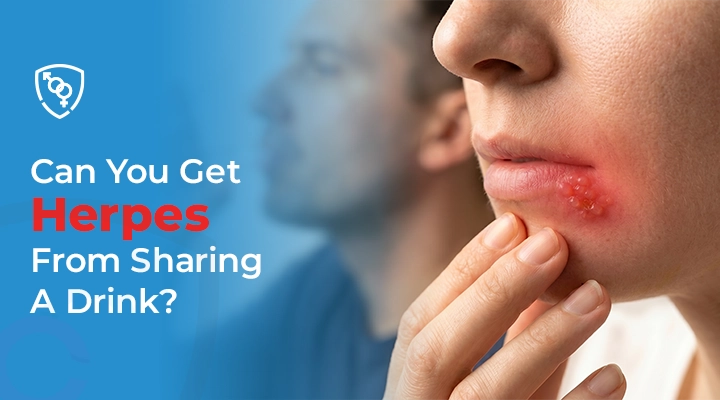
Getting herpes from sharing a drink is considered very unlikely. Herpes simplex virus (HSV) spreads mainly through direct skin-to-skin or saliva contact, especially during an active outbreak, like a cold sore. The virus does not survive well on cups, straws, utensils, or surfaces for long periods.
What Is Herpes Simplex Virus (HSV)?
Herpes simplex virus has two main types: HSV-1 and HSV-2. HSV-1 typically causes oral herpes, leading to cold sores around the mouth, while HSV-2 usually causes genital herpes. Many people carry HSV-1 without symptoms. Common symptoms include tingling, burning, or visible sores.
How Is Herpes Usually Transmitted?
Herpes spreads primarily through direct contact:
- Kissing someone with an active cold sore
- Oral sex or genital contact
- Skin-to-skin contact with infected areas
- Contact with active cold sores
Herpes can also spread through saliva, especially if there is an active outbreak. However, casual contact without direct exposure to sores is generally low risk.
Can You Get Herpes From Sharing A Drinks Or Utensils?
Transmission through drinks, straws, cups, or utensils is extremely rare. HSV requires direct contact with infected skin or mucous membranes to spread. Saliva alone is usually insufficient unless it comes from an active cold sore and enters broken skin or mucous membranes immediately. Sharing drinks carries a very low risk compared to direct contact.
How Long Does Herpes Live On Surfaces?
HSV does not survive well outside the human body. Factors like temperature, dryness, and time reduce its ability to infect. On cups, utensils, or food, the virus becomes inactive quickly, making transmission through these surfaces highly unlikely.
Situations That May Increase Risk
While rare, certain situations slightly increase exposure risk:
- Sharing drinks immediately after someone has a cold sore
- Using lip products like chapstick after an infected person
- Direct saliva exchange
Even in these scenarios, risk remains lower than direct contact during an active outbreak.
Symptoms Of Oral Herpes
- Cold sores or blisters around the mouth
- Tingling, itching, or burning sensation before sores appear
- Mouth sores
- Fever or swollen lymph nodes during the first outbreak
How Contagious Is Herpes?
Herpes is most contagious during active outbreaks. However, asymptomatic shedding can occur, meaning the virus can occasionally spread without visible symptoms. Many people carry HSV-1 without ever showing signs, which reduces overall transmission risk.
Prevention Tips
- Avoid direct contact with active sores
- Do not share lip balm, razors, or towels
- Wash hands after touching sores
- Practice safer sexual contact
When Should You Get Tested?
Consider testing if:
- You notice symptoms after possible exposure
- You have recurrent sores or tingling sensations
- You are due for routine STD screening
Manhattan STD Testing offers confidential herpes testing in NYC with same-day appointments available for peace of mind.
Emotional Reassurance
Herpes is common, and many people carry HSV unknowingly. Worry about transmission through casual contact like sharing drinks is usually higher than actual risk. Getting tested can provide clarity and peace of mind.
Conclusion
While sharing a drink or utensils is generally very low risk for herpes transmission, understanding the virus, its symptoms, and realistic exposure scenarios can help you make informed decisions. If you have concerns or notice symptoms, Manhattan STD Testing offers confidential testing to provide clarity and peace of mind.
Frequently Asked Questions
Can kissing someone without visible sores transmit herpes?
Yes, asymptomatic shedding can occasionally spread HSV, though the risk is lower than during an active outbreak.
Does brushing your teeth after someone with a cold sore increase risk?
The risk is minimal since HSV doesn’t survive long on toothbrushes and requires direct mucous membrane contact.
Can children catch oral herpes from shared toys?
Transmission is rare, but if a toy has fresh saliva from an active cold sore and touches the mouth, it’s theoretically possible.
Can stress or illness trigger herpes transmission?
Stress and illness can reactivate the virus in someone who already carries HSV, increasing potential contagion during outbreaks.
Is it necessary to disinfect surfaces to prevent herpes?
Routine cleaning is sufficient; HSV doesn’t survive long on surfaces, so extensive disinfection isn’t needed for casual prevention.
Disclaimer
This blog is for informational & educational purposes only and does not intend to substitute any professional medical advice or consultation. For any health-related concerns, please consult with your physician, or call 911.

About The Author
Dr. Syra Hanif M.D.Board Certified Primary Care Physician

Dr. Syra Hanif is a board-certified Primary Care Physician (PCP) dedicated to providing compassionate, patient-centered healthcare.