



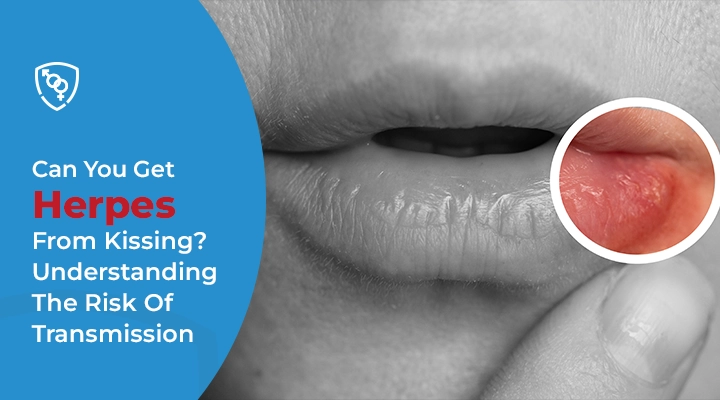
Yes, you can get herpes from kissing. Oral herpes, usually caused by HSV-1, spreads through contact with infected oral skin, saliva or cold sores. Risk is highest during an outbreak but remains possible without visible sores due to asymptomatic viral shedding.
How Does Herpes Spread?
Herpes spreads mainly through direct contact with infected skin, sores or mucous membranes. Mucous membranes are the moist tissues lining areas such as the mouth and genitals.
The two main herpes simplex viruses are:
- HSV-1: Commonly causes oral herpes, including cold sores around the lips or mouth. It can spread through kissing and oral sex.
- HSV-2: Commonly causes genital herpes and usually spreads through vaginal, anal or oral sexual contact.
Common transmission routes include:
- Kissing someone with oral herpes
- Receiving oral sex from someone with oral HSV-1
- Direct genital skin-to-skin contact
- Vaginal or anal sex
- Contact with an active herpes sore
Herpes from kissing usually affects the oral area. However, either virus can infect the mouth or genitals when it contacts those areas.
Can You Get Herpes From Kissing Someone With Herpes?
Yes, but kissing someone with herpes does not guarantee transmission. The chances of getting herpes from an infected partner depend on the virus type, outbreak status, contact location and whether infected skin directly touches the mouth.
The risk is higher when:
- A cold sore, fever blister or open ulcer is present
- Tingling, itching or burning suggests an outbreak is beginning
- A sore is healing but has not completely disappeared
- The kiss directly contacts the infected area
- The skin around the lips is cracked or irritated
The risk is lower when:
- No sores or warning symptoms are present
- The infected partner recognizes early outbreak symptoms
- Kissing is avoided from the first tingling sensation until the skin heals
- Preventive treatment is used under medical guidance
There is no reliable percentage for the chances of getting herpes from kissing once. A single kiss can transmit HSV-1, especially during an active cold sore outbreak, but exposure does not always result in infection.
Can Herpes Be Transmitted Through Saliva?
HSV can be present in saliva, but herpes usually spreads through direct contact with infected oral tissues, sores or mucous membranes. Kissing can transmit oral herpes because it involves close contact with the lips and mouth.
Herpes does not typically spread through toilet seats, bedding, pools, towels, soap or silverware. Avoid sharing lip products, toothbrushes or other items that touch an active cold sore.
Can You Get Genital Herpes From Kissing?
No, ordinary mouth-to-mouth kissing usually does not cause genital herpes. Kissing most often transmits oral HSV-1. Genital HSV-1 can spread through oral sex, while HSV-2 typically spreads through genital or anal sexual contact.
The risk depends on the type of contact:
- Mouth-to-mouth kissing: Primarily presents a risk of oral HSV-1.
- Oral-to-genital contact: Can transmit oral HSV-1 to the genital area.
- Genital-to-genital contact: Can transmit genital HSV-1 or HSV-2.
Can Herpes Spread Without Visible Sores?
Yes. Herpes can spread through asymptomatic viral shedding. This occurs when HSV becomes active on the skin or mucous membranes without producing a visible blister or sore.
The risk is lower without symptoms, but it is not zero. Many people with oral herpes do not know they carry HSV-1 because they have never noticed an outbreak or have mistaken their symptoms for dry or irritated skin.
How Can You Reduce Herpes Transmission Risk?
You can reduce the risk of spreading herpes by avoiding intimate contact during outbreaks, using barrier protection and discussing symptoms and treatment options with your partner.
Herpes transmission cannot always be prevented, but you can reduce the risk by:
- Avoid kissing when a cold sore is present.
- Stop intimate contact when tingling, itching or burning begins.
- Wait until sores have completely healed before resuming kissing or oral sex.
- Avoid touching herpes sores.
- Wash your hands immediately after applying medication or touching the affected area.
- Use condoms or dental dams during oral, vaginal and anal sex.
- Discuss herpes history and symptoms with partners.
- Ask a healthcare professional about suppressive antiviral treatment for frequent outbreaks.
Active cold sores contain a higher concentration of the virus. Avoiding direct contact with the affected area is one of the most effective ways to reduce transmission.
When Should You Consider Herpes Testing?
Consider herpes testing after a known exposure or if you develop symptoms such as blisters, sores, tingling, itching or burning around the mouth or genitals.
Testing may be appropriate after exposure, especially if symptoms develop. Watch for:
- Tingling, itching or burning around the mouth
- Small, fluid-filled blisters
- Painful sores around the lips or inside the mouth
- Swollen lymph nodes
- Fever, headache or body aches during a first outbreak
A swab from a fresh sore is usually most accurate. Blood tests can detect HSV antibodies but cannot show the infection’s location, timing or source. Testing immediately after exposure may be too early because antibodies can take weeks to develop.
Manhattan STD Testing can recommend the right test based on your symptoms and exposure.
Conclusion
Herpes can spread through kissing, particularly when an active oral cold sore or early outbreak symptoms are present. HSV-1 is responsible for most oral herpes transmission, while genital herpes generally requires sexual or oral-to-genital contact.
Concerned about a recent exposure or new symptoms? Manhattan STD Testing provides confidential evaluation and appropriate herpes testing based on your symptoms, exposure history and testing timeline.
Frequently Asked Questions
Does the type of kiss affect herpes risk?
Any kiss involving direct contact with an infected area can transmit herpes.
How soon can herpes symptoms appear after kissing?
Symptoms may appear within 2–12 days, although many people develop no noticeable symptoms.
Can you get herpes from a kiss on the cheek?
It is unlikely unless an active cold sore touches broken or irritated skin.
Can HSV-2 spread through mouth-to-mouth kissing?
It is possible but uncommon. HSV-1 causes most oral herpes transmitted through kissing.
Can herpes from kissing cause sores inside the mouth?
Yes. Oral herpes can cause painful sores on the lips, gums, tongue, or inside the mouth.
Disclaimer
This blog is for informational & educational purposes only and does not intend to substitute any professional medical advice or consultation. For any health-related concerns, please consult with your physician or call 911.

About The Author
Dr. Syra Hanif M.D.Board Certified Primary Care Physician

Dr. Syra Hanif is a board-certified Primary Care Physician (PCP) dedicated to providing compassionate, patient-centered healthcare.