



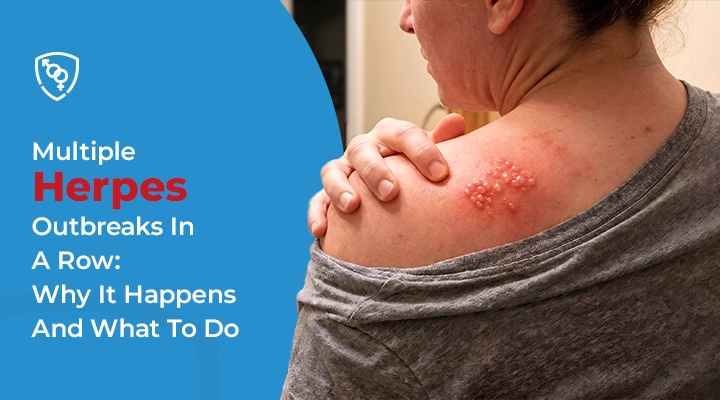
Multiple herpes outbreaks in a row can happen when the herpes virus reactivates repeatedly or when one outbreak has not fully healed before new sores appear. Stress, illness, poor sleep, hormonal changes, friction and immune system changes may contribute. Antiviral treatment can help shorten outbreaks and reduce how often they return.
Understanding Herpes Outbreaks
Herpes is caused by the herpes simplex virus, also known as HSV.
There are two main types:
- HSV-1 commonly causes oral herpes but can also cause genital herpes.
- HSV-2 is more commonly associated with genital herpes.
After initial infection, HSV stays dormant in nearby nerve cells and can later reactivate, traveling to the skin and causing another herpes outbreak. Genital HSV-2 tends to recur more often than HSV-1, with outbreaks most frequent in the first year and usually decreasing over time.
Why Do Multiple Herpes Outbreaks Happen Close Together?
Symptoms returning shortly after an outbreak don’t always mean the infection is worsening; they may reflect a new recurrence, ongoing healing from the same episode or another skin condition.
Common reasons for multiple herpes outbreaks in a row include:
- Emotional stress or anxiety
- Viral or bacterial illness
- Fatigue or lack of sleep
- Menstrual or hormonal changes
- Changes in immune system function
- Friction from sex, exercise, shaving or tight clothing
- Skin irritation or injury
- Excessive sun exposure, especially with oral herpes
- Delaying or inconsistently taking prescribed antiviral medication
Some people identify clear triggers, while others do not. Frequent genital symptoms may also be caused by conditions such as ingrown hairs, folliculitis, contact dermatitis, yeast infections, other STIs or skin irritation, so examination and testing may be needed if the diagnosis is unclear.
How Often Do Herpes Outbreaks Occur?
The answer to how often herpes outbreaks occur varies widely: some people have one outbreak with few or no further symptoms, while others may have several in the first year. Genital HSV-2 tends to recur more often than HSV-1.
Outbreak patterns can change over time, with long symptom-free periods or temporary clusters and a phase of constant herpes outbreaks does not mean it will continue permanently.
Consider seeking medical advice when:
- New sores appear before older sores have healed
- Outbreaks repeatedly occur within short periods
- Symptoms affect sleep, work, relationships or daily activities
- Antiviral medication does not appear to help
- The original herpes diagnosis was never confirmed
How Long Do Herpes Outbreaks Last?
An initial outbreak is usually longer and more noticeable, sometimes lasting about two to three weeks. Recurrent outbreaks are typically milder and shorter, often healing within a few days to two weeks, though timing varies by person.
Exactly how long herpes outbreaks last may depend on:
- Whether it is an initial or recurrent outbreak
- How quickly antiviral treatment is started
- The number and location of sores
- General immune health
- Whether friction continues to irritate the area
- Whether another infection or skin condition is present
Episodic antiviral treatment is usually most effective when started during early warning symptoms, such as tingling, itching, burning, tenderness or the first appearance of sores.
What Should You Do If Herpes Outbreaks Keep Returning?
Treatment aims to shorten outbreaks, ease symptoms, reduce recurrences and lower transmission risk.
There is no cure for HSV, but it can be effectively managed.
Antiviral Treatment
A healthcare provider may recommend:
- Episodic therapy: Medication taken at the first sign of symptoms.
- Suppressive therapy: Daily medication to reduce outbreak frequency.
Common antivirals include acyclovir, valacyclovir and famciclovir.
Daily suppressive therapy can significantly reduce frequent outbreaks and may be recommended if symptoms are painful, disruptive or cause transmission concerns. Do not change medication without medical advice.
Track Triggers
Record outbreaks and possible triggers such as stress, illness, poor sleep, hormonal changes, sex, shaving, exercise or skin irritation. This can help identify personal patterns.
Protect The Area
During outbreaks:
- Keep the area clean and dry
- Avoid touching or picking sores
- Wash hands after contact
- Wear loose clothing
- Avoid sex during symptoms
- Take medication as prescribed
HSV can still spread even without visible sores.
Support Overall Health
Good sleep, balanced nutrition, stress control and managing other health conditions may help reduce outbreaks, though they do not eliminate HSV.
How Can You Sleep During A Herpes Outbreak?
Pain, itching and friction can make sleeping uncomfortable.
The following measures may help:
- Wear loose, breathable sleepwear.
- Avoid tight underwear or clothing that rubs the affected area.
- Keep the skin clean and dry before bed.
- Use a clean, wrapped cool compress for temporary comfort.
- Take prescribed antiviral medication as directed.
- Ask a healthcare provider which pain reliever is appropriate.
- Sleep in a position that places less pressure on the sores.
- Use clean bedding and change it when necessary.
When considering how to sleep during a herpes outbreak, the main goals are reducing friction, keeping the area dry and controlling pain safely.
How Can You Help Prevent Future Herpes Outbreaks?
It may not be possible to prevent every recurrence, but several steps can help reduce the likelihood or severity of future symptoms.
To help manage how to prevent a herpes outbreak:
- Take antiviral medication exactly as prescribed.
- Start episodic treatment at the first warning signs.
- Discuss daily suppressive therapy if outbreaks are frequent.
- Track and reduce personal triggers.
- Maintain a consistent sleep schedule.
- Manage prolonged stress.
- Avoid unnecessary friction or irritation.
- Use sun protection if sunlight triggers oral herpes.
- Treat other illnesses and health conditions appropriately.
Outbreak prevention plans should be individualized because recurrence patterns and triggers differ from person to person.
Can Herpes Return After Years Without Symptoms?
Yes. HSV can remain inactive inside nerve cells for months or years before becoming active again.
Possible explanations for what causes a herpes outbreak after years include:
- Illness
- Emotional or physical stress
- Fatigue
- Hormonal changes
- Changes in immune function
- Skin irritation
- Friction or injury
Sometimes no specific trigger can be identified.
An outbreak after a long symptom-free period does not automatically mean the infection was recently acquired. It also does not prove that a partner recently transmitted the virus.
When Should You See A Doctor?
Schedule a medical evaluation when:
- Outbreaks occur repeatedly within a short period
- Sores are severe, widespread or unusually painful
- Lesions are not healing
- Symptoms continue despite antiviral treatment
- The diagnosis has never been confirmed
- Symptoms look different from previous outbreaks
- Urination becomes painful or difficult
- You have unusual discharge, odor or additional symptoms
- You have a weakened immune system
- You are pregnant or planning a pregnancy
- You are concerned about transmission
- You want to discuss daily suppressive treatment
Testing an active sore can help determine whether HSV is causing the symptoms. Additional testing may also be recommended when another infection or condition is possible.
Manhattan STD Testing provides confidential herpes testing, appropriate testing and personalized treatment guidance for people experiencing recurrent or unexplained symptoms.
Conclusion
Experiencing multiple herpes outbreaks in a row can be frustrating, but it does not necessarily mean the infection is becoming permanently worse. Recurrence patterns vary and symptoms can often be controlled by identifying possible triggers, starting treatment early and considering suppressive antiviral therapy.
If outbreaks are frequent, persistent or difficult to manage, schedule a confidential herpes evaluation with Manhattan STD Testing to confirm the cause of your symptoms and discuss an appropriate treatment plan.
Frequently Asked Questions
Can a herpes outbreak happen without visible blisters?
Yes. Some recurrences cause only tingling, burning, itching or mild redness. However, these symptoms can have other causes, so persistent irritation should be evaluated.
Do recurrent outbreaks always appear in the same place?
Not always. Sores often return in the same general area, but they may appear on nearby skin supplied by the same group of nerves.
Can repeated herpes outbreaks cause permanent scarring?
Most herpes sores heal without scars. Scarring is more likely if sores are scratched, picked, severely irritated or affected by a secondary bacterial infection.
Could antiviral resistance cause frequent outbreaks?
Antiviral resistance is uncommon in people with healthy immune systems. Persistent sores despite taking medication correctly should be assessed by a healthcare provider.
Should a recurring sore be tested again?
Testing may be helpful if the original diagnosis was uncertain, symptoms look different or treatment is not working. A swab is usually most useful when the sore is fresh.
Disclaimer
This blog is for informational & educational purposes only and does not intend to substitute any professional medical advice or consultation. For any health-related concerns, please consult with your physician or call 911.

About The Author
Dr. Syra Hanif M.D.Board Certified Primary Care Physician

Dr. Syra Hanif is a board-certified Primary Care Physician (PCP) dedicated to providing compassionate, patient-centered healthcare.