



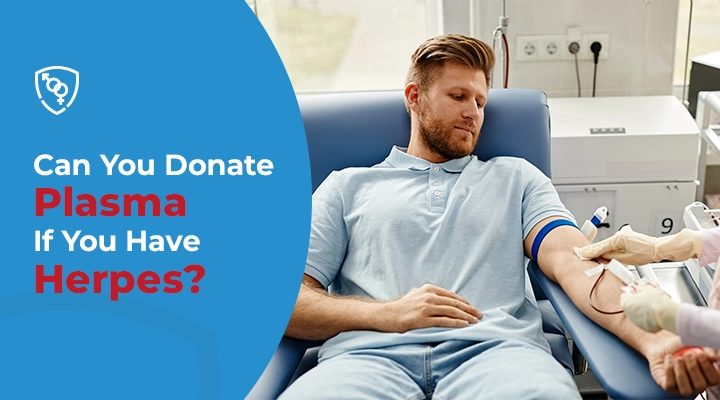
Yes, you can usually donate plasma if you have herpes and feel healthy. HSV-1 or HSV-2 does not normally disqualify you from donating. However, an active outbreak, fever, infected sores or feeling unwell may temporarily delay donation. Always disclose your symptoms and medications to the donation center.
What Is Herpes?
Herpes is a common viral infection caused by the herpes simplex virus:
- HSV-1 commonly causes cold sores around the mouth but can also cause genital herpes.
- HSV-2 more commonly causes genital herpes.
Some people never develop noticeable symptoms. Others may experience:
- Blisters or painful sores
- Itching, burning or tingling
- Painful urination
- Fever or body aches
- Swollen lymph nodes
Herpes is most contagious when sores or blisters are present, but it can also spread without visible symptoms through asymptomatic viral shedding.
HSV mainly spreads through direct skin-to-skin, oral or sexual contact. It is not typically considered a blood-transmitted infection.
Can You Donate Plasma If You Have Herpes But No Symptoms?
In most cases, yes.
A dormant herpes infection usually does not prevent plasma donation if:
- You feel healthy
- You have no fever or active illness
- You do not have an infected lesion near the needle site
- You meet the center’s general health requirements
- You disclose your medical history and medications honestly
The donation center will make the final decision based on your current health and its eligibility policy.
Can You Donate Plasma During A Herpes Outbreak?
An active outbreak may temporarily defer you from donating, especially if you have:
- Open, draining or infected sores
- Fever or flu-like symptoms
- Severe pain or fatigue
- A widespread first outbreak
- A lesion or skin infection near the arm used for donation
- Another active infection
A small cold sore may not automatically prevent donation if you otherwise feel well. However, some centers may ask you to wait until it heals.
How Long Should You Wait After An Outbreak?
There is no universal waiting period for donating plasma after a herpes outbreak.
You should generally wait until:
- All open sores have healed
- The skin is dry and intact
- You no longer have a fever
- You feel healthy
- Any secondary infection has cleared
Contact the donation center before your appointment because deferral policies may vary.
Can You Donate Plasma While Taking Herpes Medication?
Taking antiviral medication such as acyclovir, valacyclovir or famciclovir does not necessarily disqualify you.
Donation staff may consider:
- Whether you currently have symptoms
- Why you are taking the medication
- Whether it is daily suppressive treatment or short-term outbreak treatment
- Your overall health
- The center’s medication policy
Do not stop prescribed medication to qualify for donation. Tell the staff the medication name, dosage and reason you take it.
Can You Donate Blood If You Have Herpes?
The answer is usually yes. A history of HSV-1 or HSV-2 does not normally prevent blood donation when you feel healthy and meet all other requirements.
You may need to postpone donating if you have an active infection, fever, severe outbreak, infected sores or a lesion near the needle insertion site.
Does Herpes Make Donated Plasma Unsafe?
A dormant herpes infection does not normally affect the quality of your plasma.
Donation centers use several safety measures, including:
- Donor health questionnaires
- Medication and symptom reviews
- Temperature and vital-sign checks
- Examination of the needle site
- Testing for specified blood-transmitted infections
- Sterile, single-use collection equipment
Routine plasma screening does not normally diagnose HSV-1 or HSV-2. Therefore, donating plasma should not be used as a way to determine whether you have herpes.
What Disqualifies You From Donating Plasma?
Herpes alone usually does not disqualify you. Other reasons for temporary or permanent deferral may include:
- Fever or active illness
- Infection near the needle site
- Low hemoglobin or hematocrit
- Abnormal vital signs
- Certain medications or medical conditions
- Pregnancy or recent pregnancy
- Positive testing for certain blood-transmitted infections
- Not meeting age or weight requirements
Eligibility rules can differ, so the donation center has the final authority.
What Should You Do Before Donating?
Follow these steps:
- Check your symptoms: Look for sores, fever, fatigue, swollen glands or signs of infection.
- Wait if you feel sick: Do not donate during a severe outbreak or active illness.
- Call the center: Ask about its policy for herpes outbreaks and antiviral medication.
- Disclose your medications: Provide the names and dosages of anything you take.
- Answer honestly: Complete the donor questionnaire truthfully.
- Follow the staff’s decision: They will determine whether you are eligible that day.
When Should You See A Healthcare Professional?
Seek medical advice if:
- You may be experiencing your first outbreak
- Your sores are severe or not healing
- You have fever or difficulty urinating
- You experience frequent outbreaks
- You are unsure whether your symptoms are herpes
- You recently had a possible STD exposure
A plasma donation screening is not a complete STD test.
Manhattan STD Testing provides confidential herpes testing and evaluation in New York City. Depending on your symptoms, herpes testing may involve a swab from an active sore or an HSV-1 and HSV-2 blood test.
Conclusion
Can you donate plasma if you have herpes? Usually, yes. People with HSV-1 or HSV-2 can often donate when they feel healthy and have no severe active outbreak, fever, infected sores or illness.
Disclose your symptoms and medications, contact us if you recently had an outbreak and allow the donation staff to make the final eligibility decision.
Frequently Asked Questions
Can I donate plasma if my partner has herpes?
Yes. Having a partner with herpes does not automatically disqualify you. However, seek medical advice if you develop sores, tingling, burning or other symptoms.
Does oral herpes affect eligibility differently from genital herpes?
Usually not. Donation staff focus more on active symptoms, fever, skin infections and your overall health than on whether herpes is oral or genital.
Can plasma donation trigger a herpes outbreak?
Plasma donation does not directly cause herpes outbreaks. However, stress, dehydration, fatigue or poor sleep may trigger symptoms in some people, so hydrate and rest before and after donating.
Do herpes antibodies make my plasma unsafe?
No. Herpes antibodies show that your immune system has encountered HSV. Their presence alone does not mean you have an active infection or that your plasma is unsafe.
Can I donate if I only have a healed herpes scar?
Usually, yes. A completely healed scar should not affect eligibility, particularly when it is away from the needle insertion site and you have no active symptoms.
Disclaimer
This blog is for informational & educational purposes only and does not intend to substitute any professional medical advice or consultation. For any health-related concerns, please consult with your physician, or call 911.

About The Author
Dr. Syra Hanif M.D.Board Certified Primary Care Physician

Dr. Syra Hanif is a board-certified Primary Care Physician (PCP) dedicated to providing compassionate, patient-centered healthcare.