



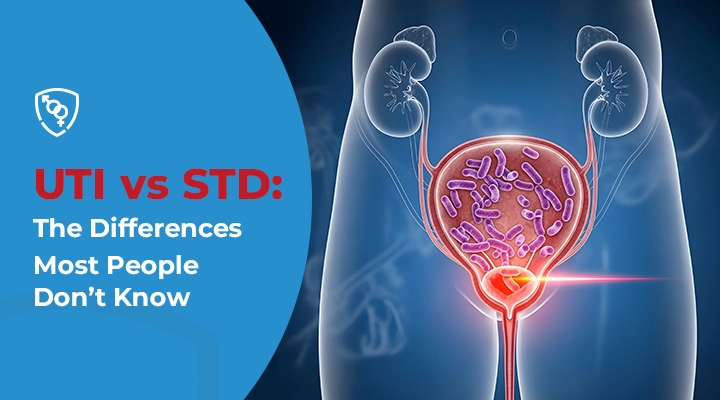
Burning when you urinate often leads to one immediate question: Is it a UTI or STD? Although urinary tract infections and sexually transmitted diseases can cause similar symptoms, they have different causes, affect different parts of the body and require different tests and treatments.
Because symptoms alone may not provide a reliable answer, professional testing is often the safest way to determine what is causing the discomfort.
What Is The Difference Between UTI And STD?
UTIs are usually bacterial infections of the bladder or another part of the urinary tract and are not sexually transmitted. STDs are infections spread mainly through sexual contact and may affect the genitals, urethra, rectum or throat. Because both can cause burning urination, medical testing is often needed for the correct diagnosis and treatment.
UTI vs STD At A Glance
| Feature | UTI | STD |
| Main cause | Usually bacteria entering the urinary tract | Bacteria, viruses or parasites transmitted through sexual contact |
| Common examples | Bladder infection, urethral infection, kidney infection | Chlamydia, gonorrhea, herpes, trichomoniasis |
| Affected areas | Urethra, bladder, ureters or kidneys | Genitals, urethra, cervix, rectum, throat, skin or other areas |
| Typical symptoms | Urinary urgency, frequent urination, burning, cloudy urine, bladder pressure | Discharge, sores, itching, painful urination, pelvic pain, bleeding or no symptoms |
| Risk factors | Urinary retention, sexual activity, pregnancy, urinary obstruction, catheter use | Unprotected sexual contact, new or multiple partners, exposure to an infected partner |
| Testing | Urinalysis and urine culture | Urine NAAT, swabs, blood tests or lesion testing |
| Treatment | Antibiotics when caused by bacteria | Antibiotics, antivirals or other infection-specific medication |
| Partner treatment | Usually unnecessary | Often necessary for bacterial or parasitic STDs |
The urinary tract includes the kidneys, ureters, bladder and urethra. Most uncomplicated UTIs affect the bladder and urethra. STDs also called sexually transmitted infections or STIs, may be caused by bacteria, viruses or parasites and can affect several areas depending on the type of sexual exposure.
What Is A Urinary Tract Infection?
A urinary tract infection (UTI) occurs when bacteria enter and multiply in the urinary system, usually affecting the bladder or urethra. In some cases, it can spread to the kidneys.
Most UTIs are caused by bacteria from the digestive tract, especially E. coli. Other bacteria like Klebsiella and Proteus may also be involved.
Risk factors include:
- Incomplete bladder emptying
- Urinary stones or blockage
- Pregnancy
- Catheter use
- Menopause
- Urinary tract abnormalities
- Previous UTIs
- Sexual activity
UTIs are not caused by poor hygiene alone.
What Is An STD?
An STD is an infection spread mainly through sexual contact, including vaginal, anal or oral sex. Some, like herpes, can also spread through skin-to-skin contact.
Common STDs that may cause urinary or genital symptoms include:
- Chlamydia
- Gonorrhea
- Genital herpes
- Trichomoniasis
Some STDs cause mild or no symptoms.
“STI” refers to the infection, while “STD” refers to the disease it may cause, but the terms are often used interchangeably.
Is A UTI An STD?
No, a UTI is not an STD. A typical UTI is caused by bacteria entering the urinary tract rather than by an infection transmitted from a sexual partner. However, sexual activity can move bacteria toward the urethra and increase the likelihood of developing a UTI.
This means someone may experience a UTI after sex without having contracted an STD.
What Causes UTIs vs STDs?
UTIs occur when bacteria enter the urinary tract, while STDs are transmitted through sexual contact.
Common UTI Causes
UTIs usually develop when bacteria travel into the urethra and bladder.
Risk increases with:
- Urinary retention
- Kidney or bladder stones
- Enlarged prostate
- Catheter use
- Pregnancy or menopause-related changes
- Sexual activity
Common STD Causes
STDs are caused by specific organisms:
- Chlamydia is caused by Chlamydia trachomatis bacteria.
- Gonorrhea is caused by Neisseria gonorrhoeae bacteria.
- Genital herpes is caused by herpes simplex virus type 1 or type 2.
- Trichomoniasis is caused by the parasite Trichomonas vaginalis.
They spread through vaginal, anal or oral sex and may be transmitted even without symptoms.
UTI vs STD Symptoms
The most confusing part of the UTI vs STD comparison is that both can cause discomfort around the urethra.
Common UTI Symptoms
A bladder infection may cause:
- Burning or pain during urination
- Frequent urination
- A sudden or persistent urge to urinate
- Passing small amounts of urine
- Pressure or discomfort in the lower abdomen
- Cloudy, dark or bloody urine
- Strong-smelling urine
Fever, chills, nausea, vomiting or pain in the back or side can indicate that the infection may have reached the kidneys and requires prompt medical attention.
Common STD Symptoms
Depending on the infection, possible STD symptoms include:
- Burning during urination
- Vaginal or penile discharge
- Genital itching or irritation
- Blisters, sores, ulcers or a genital rash
- Pelvic or lower abdominal pain
- Testicular pain or swelling
- Pain during sex
- Bleeding between periods or after sex
- Rectal discomfort, bleeding or discharge
- Throat symptoms after oral exposure
Some STDs cause mild symptoms or none at all. A lack of discharge, sores or pain does not rule out an infection.
Why Can an STD Feel Like a UTI?
Some STDs, like chlamydia and gonorrhea, can inflame the urethra (urethritis), causing burning during urination that mimics a UTI. Painful urination alone cannot distinguish a UTI from an STD.
Testing is recommended, especially if you have:
- A new or multiple partners
- Unprotected sex
- A partner with an STD
- Discharge, sores or blisters
- Pelvic or testicular pain
- Bleeding after sex
- Persistent symptoms despite UTI treatment
UTI vs Chlamydia
Both can cause burning urination. Chlamydia may also cause discharge, pelvic pain, bleeding between periods or testicular pain. Many people have no symptoms. It requires a specific urine or swab test, UTI tests do not rule it out.
UTI vs Gonorrhea
Gonorrhea can cause burning, discharge and pelvic or testicular pain. Symptoms may be mild or absent, especially in women. It can affect the genitals, rectum or throat, so testing may involve multiple sites.
UTI vs Herpes
Herpes often causes blisters, sores, itching or tingling. Burning may occur when urine contacts sores, which can feel like a UTI. Symptoms may appear within days or later. Active sores are best tested with a swab.
What About Trichomoniasis?
Trichomoniasis can cause burning, itching, irritation, odor or discharge. Many people have mild or no symptoms. Symptoms may appear within weeks or later.
How Are UTIs And STDs Diagnosed?
A healthcare provider may ask about your symptoms, urinary history, recent sexual contact, condom use, partners and previous infections. These are routine medical questions used to select the correct tests.
UTI Testing
Testing may include:
- Urinalysis: Looks for signs of inflammation, blood and other abnormalities.
- Urine culture: Identifies bacteria and may help determine which antibiotic is appropriate.
- Additional evaluation: May be needed for recurring, severe or complicated infections.
UTIs are diagnosed using medical history, examination and laboratory testing rather than symptoms alone.
STD Testing
Depending on symptoms and exposure, STD testing may include:
- Urine NAAT testing for chlamydia or gonorrhea
- Vaginal or urethral swabs
- Throat or rectal swabs
- A swab from an active herpes sore
- Blood tests for HIV, syphilis, hepatitis or selected herpes testing
A single urine sample does not necessarily test for every STD or every exposure site. Tell your healthcare provider about oral or anal exposure so the appropriate areas can be tested.
How Are UTIs Treated?
Bacterial bladder infections are usually treated with antibiotics selected according to the patient’s health, infection severity, local resistance patterns and test results when available.
Treatment may also include:
- Drinking an appropriate amount of water
- Using clinician-recommended pain relief
- Resting
- Completing the full prescribed antibiotic course
- Returning for evaluation if symptoms persist
Hydration may help ease symptoms and support recovery, but it does not replace antibiotics when a bacterial infection requires treatment.
Do not use leftover antibiotics. The wrong medicine may fail to treat the infection, interfere with testing and contribute to antibiotic resistance.
How Are STDs Treated?
Treatment depends on the infection.
- Chlamydia: Treated with prescription antibiotics.
- Gonorrhea: Treated with the currently recommended antibiotic regimen.
- Trichomoniasis: Treated with oral prescription medication.
- Genital herpes: Managed with antiviral medication, which can shorten outbreaks and reduce symptoms but does not remove the virus from the body.
Bacterial and parasitic infections are often curable, while viral infections like herpes are managed. Partners may need testing or treatment and patients should avoid sex until treatment is complete and symptoms resolve. Retesting may be recommended due to reinfection risk.
How To Prevent Recurrent UTIs?
Practical steps that may reduce UTI risk include:
- Drink enough fluids unless a clinician has restricted your intake.
- Avoid regularly holding urine for long periods.
- Empty your bladder as completely as possible.
- Urinate after sex if it appears to help you.
- Avoid irritating genital products.
- Manage constipation and urinary retention.
- Discuss frequent infections with a healthcare provider.
- Do not repeatedly self-treat without confirming the diagnosis.
People experiencing recurrent UTIs may need further evaluation for stones, urinary retention, prostate problems, hormonal changes or structural abnormalities.
How To Protect Your Sexual Health?
To reduce STD risk:
- Use condoms correctly during vaginal, anal and oral sex.
- Remember that condoms reduce risk but do not eliminate it completely.
- Discuss testing with new partners.
- Get screened according to your anatomy, exposures and risk factors.
- Avoid sex when you or a partner has unexplained sores, discharge or other symptoms.
- Complete treatment and follow partner-management instructions.
- Receive recommended HPV and hepatitis B vaccines.
- Avoid assuming that someone is infection-free because they look healthy.
Correct condom use, regular testing, timely treatment, vaccination and mutually monogamous relationships with tested partners can help reduce the risk of sexually transmitted infections.
When Should You Seek Medical Attention?
Schedule a medical evaluation if you have:
- Persistent or worsening burning urination
- Symptoms after unprotected sex
- Unusual discharge or genital sores
- Pelvic, testicular or sexual pain
- Blood in urine or recurring symptoms
- Symptoms after treatment
- A partner with an STD
- Urinary symptoms during pregnancy
Seek urgent care for fever, chills, vomiting, severe pain, confusion, inability to urinate or rapidly worsening symptoms.
Conclusion
The main difference between UTI and STD is how the infection develops and which areas it affects. However, burning urination and pelvic discomfort can occur with either condition, making self-diagnosis unreliable.
Manhattan STD Testing offers confidential testing for chlamydia, gonorrhea, herpes, trichomoniasis and comprehensive STD panels, with walk-ins and same-day appointments available. Call +1-646-454-9000 to schedule an evaluation in Manhattan or Queens.
Frequently Asked Questions
Can a vaginal infection feel like a UTI?
Yes. Vaginal infections can cause itching, irritation and external burning during urination. An examination and appropriate testing can identify the cause.
Can kidney stones be mistaken for a UTI?
Yes. Kidney stones may cause urinary urgency, blood in the urine and severe side, back or groin pain.
Can menopause cause UTI-like symptoms?
Yes. Lower estrogen levels can cause vaginal dryness, burning, frequent urination and bladder irritation even when no infection is present.
Can an STD test be negative if taken too early?
Yes. Testing shortly after exposure may not detect an infection. A healthcare provider may recommend repeat testing based on the infection and exposure date.
Can some birth control methods increase UTI risk?
Yes. Spermicides and diaphragms may increase the likelihood of recurrent UTIs. Discuss alternatives with a healthcare provider if infections happen frequently.
Disclaimer
This blog is for informational & educational purposes only and does not intend to substitute any professional medical advice or consultation. For any health-related concerns, please consult with your physician or call 911.

About The Author
Dr. Syra Hanif M.D.Board Certified Primary Care Physician

Dr. Syra Hanif is a board-certified Primary Care Physician (PCP) dedicated to providing compassionate, patient-centered healthcare.