



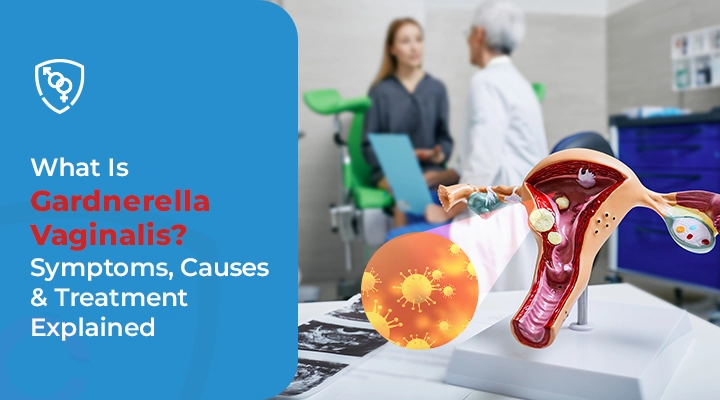
Gardnerella vaginalis is a bacterial species linked to bacterial vaginosis (BV), a common vaginal infection. Symptoms may include thin grayish discharge, a fishy odor, and mild irritation, though many women have no symptoms. It is treatable with antibiotics, and good hygiene and partner management can help prevent recurrence.
What Causes Gardnerella Vaginalis?
Gardnerella vaginalis overgrowth occurs when the natural balance of bacteria in the vagina is disrupted. Normally, “good” bacteria like Lactobacillus keep the environment acidic and healthy. When this balance shifts, Gardnerella bacteria can dominate.
Common risk factors include:
- Recent antibiotic use
- Hormonal changes (pregnancy, menstrual cycle, menopause)
- New or multiple sexual partners
- Douching or use of scented feminine products
Sexual transmission vs non-sexual causes:
Gardnerella can be present without sexual activity. While sex may increase the likelihood of BV, it is not strictly classified as an STD.
Symptoms Of Gardnerella Vaginalis
Many women with Gardnerella vaginalis may have no symptoms. When symptoms do appear, they often include:
- Thin, gray or white vaginal discharge
- Fishy odor, especially after sex
- Mild itching or irritation
Some may notice a burning sensation during urination or general discomfort in the vaginal area.
How Is It Diagnosed?
Gardnerella vaginalis is diagnosed through:
- Pelvic exam
- Vaginal swab or pH test
- Microscopy to detect clue cells
- Lab tests to confirm bacterial overgrowth
If you experience symptoms, a comprehensive STD panel can help rule out Gardnerella as well as other infections like Chlamydia or Trichomoniasis, ensuring an accurate diagnosis.
Is Gardnerella Vaginalis An STD?
Gardnerella vaginalis is not always sexually transmitted. BV can occur from bacterial imbalance rather than direct sexual transmission. Partners may rarely experience mild symptoms, but the infection is primarily linked to microbiome changes.
Treatment Options
Treatment is evidence-based and highly effective.
Antibiotics:
- Oral metronidazole or clindamycin
- Topical creams or gels applied vaginally
- Always complete the full course to prevent recurrence
Home care:
- Avoid douching or scented hygiene products
- Maintain a healthy vaginal microbiome with good hygiene and possibly probiotics
Prevention Strategies
- Practice safe sexual behaviors
- Avoid unnecessary antibiotics
- Maintain healthy vaginal flora
- Regular gynecological checkups
- Consider periodic screenings with chlamydia testing to catch potential co-infections early
Myth vs Fact
Myth: Gardnerella vaginalis is always sexually transmitted.
Fact: BV develops from bacterial imbalance; sexual activity may increase risk but is not the sole cause.
Myth: You cannot get rid of Gardnerella.
Fact: Antibiotic treatment is effective, though recurrence is possible if risk factors persist.
When To See A Doctor
Seek professional care if you experience:
- Persistent discharge or odor
- Recurrent infections
- Pelvic pain or discomfort
- BV during pregnancy (requires prompt medical attention)
Testing may include trichomoniasis testing to ensure accurate diagnosis and treatment.
Conclusion
Gardnerella vaginalis is common, treatable, and manageable. Understanding the symptoms, risk factors, and treatment options empowers women to take control of their vaginal health. Professional testing and evidence-based care, like that offered at Manhattan STD Testing, ensure accurate diagnosis and effective treatment, helping prevent recurrence and support overall reproductive health.
Frequently Asked Questions
Can Gardnerella vaginalis be cured?
Yes, with proper antibiotic treatment and follow-up, most cases are fully treatable, though recurrences can happen if risk factors persist.
How do you get Gardnerella vaginalis?
Overgrowth occurs when the natural vaginal bacteria balance is disrupted due to antibiotics, hormonal changes, douching, or sexual activity.
Is Gardnerella vaginalis contagious to partners?
It is generally not highly contagious. Partners rarely develop symptoms, but sexual activity may influence recurrence.
Can Gardnerella vaginalis cause infertility?
BV has been associated with reproductive complications, but Gardnerella alone is rarely a direct cause of infertility.
How long does Gardnerella infection last?
With treatment, symptoms typically improve within 7–10 days, but recurrence can occur if risk factors remain.
Disclaimer
This blog is for informational & educational purposes only and does not intend to substitute any professional medical advice or consultation. For any health-related concerns, please consult with your physician, or call 911.

About The Author
Dr. Syra Hanif M.D.Board Certified Primary Care Physician

Dr. Syra Hanif is a board-certified Primary Care Physician (PCP) dedicated to providing compassionate, patient-centered healthcare.