



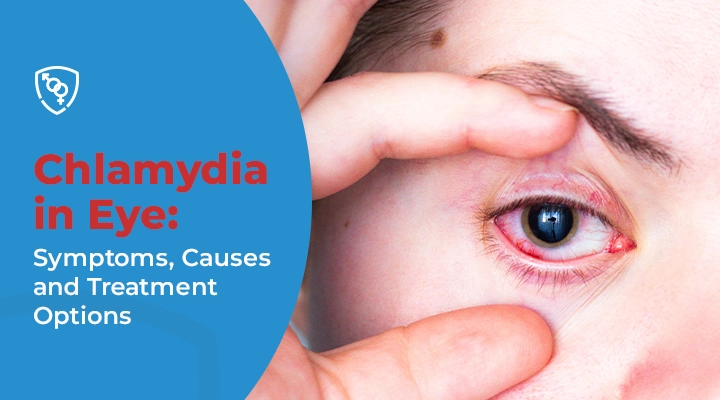
Chlamydia in eye, also called chlamydial conjunctivitis, is an eye infection caused by chlamydia trachomatis. It can cause redness, irritation, watery or mucous discharge, itching, and eyelid swelling. Early diagnosis and antibiotic treatment are important because untreated chlamydia eye infections may lead to chronic inflammation, scarring, and vision problems.
If you have eye symptoms after possible STI exposure, confidential testing can help you know what is really going on and get the right treatment.
Can You Get Chlamydia In Your Eye?
Yes. You can get chlamydia in your eye when chlamydia trachomatis, the same bacteria that causes genital chlamydia, reaches the surface of the eye.
The infection affects the conjunctiva, the thin, clear tissue covering the white part of the eye and the inside of the eyelids. Because it can look like regular “pink eye,” many people do not realize an STI may be involved.
That is why testing matters. Eye symptoms alone cannot confirm whether the cause is viral, bacterial, allergic, or chlamydial.
How Do You Get Chlamydia In The Eye?
The most common way chlamydia spreads to the eye is through autoinoculation. This means bacteria from infected genital secretions are transferred to the eye, usually by the hands.
Common examples include:
- Touching infected genital fluids and then touching or rubbing the eye
- Having genital chlamydia and poor hand hygiene after sexual contact
- Exposure to infected secretions during sexual activity
- Sharing contaminated towels or personal items, though this is less common
- Transmission from mother to baby during childbirth
In simple terms, chlamydia in eyes happens when infected fluid reaches the eye surface.
Risk Factors For Chlamydial Conjunctivitis
You may have a higher risk of chlamydia in the eye if you:
- Have a current or recent chlamydia infection
- Have another sexually transmitted infection
- Had unprotected vaginal, anal, or oral sex
- Have a new sexual partner
- Have multiple sexual partners
- Touched your eyes after sexual contact without washing your hands
- Share towels, washcloths, or makeup with someone who may have an infection
- Are immunocompromised
- Wear contact lenses and have poor lens hygiene
If you are wondering, “Can you get chlamydia in your eye even without genital symptoms?” The answer is yes. Chlamydia often causes no obvious symptoms, so you may not know you have it until testing is done.
Chlamydia Eye Symptoms
Chlamydia eye symptoms can be mild at first. In an early stage chlamydia eye infection, symptoms may look like irritation, allergies, or common pink eye.
Signs of chlamydia in eye may include:
- Red, irritated eyes
- Watery discharge
- Mucous or stringy discharge
- Yellowish or sticky discharge
- Swollen eyelids
- Itching or burning sensation
- Gritty feeling, like something is in the eye
- Eye tenderness or mild pain
- Crusting around the eyelids, especially after sleep
- Sensitivity to light
- Swollen lymph node near the ear
- Symptoms that last longer than typical viral pink eye
Some people describe chlamydia eye discharge as watery at first and more mucous-like over time. Others notice crusting or “spotting” at the eyelid margin. While “chlamydia eye spotting” is not a formal medical diagnosis, people may use that phrase to describe small spots of discharge, crusting, or irritation around the eye.
You should not try to diagnose chlamydia eyes based on appearance alone. Several eye conditions can cause redness and discharge.
Chlamydia In Eye vs Other Types Of Pink Eye
Chlamydia in the eye can look similar to other eye infections, but there are important differences.
| Condition | Common Cause | Typical Symptoms | Key Difference |
| Chlamydial conjunctivitis | Chlamydia trachomatis | Redness, irritation, mucous discharge, swelling, chronic symptoms | Often linked to STI exposure and needs oral antibiotics |
| Viral conjunctivitis | Viruses, often adenovirus | Watery eyes, redness, burning, cold-like symptoms | Usually very contagious and often improves with supportive care |
| Bacterial conjunctivitis | Common bacteria | Thick yellow or green discharge, eyelid crusting | May need antibiotic eye drops depending on severity |
| Allergic conjunctivitis | Allergens like pollen or dust | Itching, watery eyes, swelling, sneezing | Usually affects both eyes and is not an infection |
A key difference is that chlamydia conjunctivitis usually requires systemic antibiotics, meaning medicine taken by mouth. Regular over-the-counter eye drops or pink eye drops may soothe irritation but will not reliably clear the underlying chlamydia infection.
Timeline: Symptom Progression & Recovery
Every person is different, but chlamydia eye infections often follow a pattern.
Early Stage: First Several Days
In the early stage, you may notice:
- Mild redness
- Slight irritation
- Watery eyes
- Light discharge
- Itching or burning
At this point, it can easily be mistaken for allergies or viral pink eye.
Ongoing Symptoms: 1–2 Weeks or Longer
If untreated, symptoms may become more noticeable:
- More mucus discharge
- Swollen eyelids
- Crusting after sleep
- Persistent redness
- Tenderness or discomfort
- Symptoms that do not improve with basic eye care
After Starting Treatment
With the right antibiotics, symptoms often begin improving within several days. However, you should complete the full treatment exactly as prescribed.
Do not stop antibiotics early just because your eye feels better. Stopping early can allow infection to continue or come back.
Follow-Up and Retesting
Your provider may recommend follow-up testing, especially if symptoms continue, reinfection is possible, or a partner has not been treated.
How Is Chlamydia In The Eye Diagnosed?
Diagnosis usually starts with a medical evaluation. Depending on your symptoms and exposure history, you may see a primary care provider, urgent care clinician, sexual health provider, or ophthalmologist.
Step-by-Step Diagnosis
The following steps help healthcare providers determine whether your symptoms are caused by chlamydial conjunctivitis or another eye condition.
- Eye examination
A provider checks your eye for redness, discharge, swelling, irritation, and signs of corneal involvement.
- Sexual health history
You may be asked about recent sexual contact, STI exposure, new partners, condom use, and current genital, throat, or rectal symptoms.
- Laboratory testing
Testing may include a sample from the eye and/or STI testing from urine, vaginal, cervical, rectal, or throat samples. Lab testing helps detect Chlamydia trachomatis.
- Differentiation from other conjunctivitis types
Your provider will consider viral conjunctivitis, bacterial conjunctivitis, allergic conjunctivitis, gonorrhea-related eye infection, herpes eye disease, and other causes.
Because std in eye symptoms can overlap, lab testing is the safest way to confirm the cause.
Chlamydia Eye Treatment Options
Chlamydia eye treatment usually involves antibiotics prescribed by a healthcare professional. Treatment should address both the eye infection and any genital, rectal, or throat chlamydia infection that may be present.
Evidence-Based Treatment May Include
- Oral antibiotics, such as doxycycline or azithromycin
- Testing and treatment for sexual partners
- Avoiding sex until treatment is complete and your provider says it is safe
- Follow-up care if symptoms do not improve
- Screening for other STIs when appropriate
Do not self-treat with leftover antibiotics or use someone else’s medication. The wrong medicine, dose, or duration may fail to clear the infection.
Supportive Eye Care During Treatment
Supportive care can help relieve discomfort while antibiotics treat the infection.
You may be advised to:
- Use preservative-free artificial tears
- Gently clean eyelid crusting with clean water or sterile saline
- Apply a clean warm compress
- Avoid rubbing your eyes
- Wash your hands often
- Avoid contact lenses until cleared by a provider
- Throw away or replace contaminated eye makeup
- Avoid sharing towels, washcloths, or pillowcases
Supportive eye care can reduce irritation, but it does not replace antibiotics for chlamydial conjunctivitis.
Can Chlamydia In The Eye Go Away Without Treatment?
You should not wait for chlamydia in the eye to go away on its own.
Some symptoms may fluctuate, but untreated chlamydia eye infections can persist and may lead to complications. Also, if you have an untreated genital, rectal, or throat infection, you can pass chlamydia to partners or become reinfected after treatment.
Early diagnosis and treatment are the safest approach.
Possible Complications If Left Untreated
Untreated chlamydia in the eye can cause ongoing inflammation and damage to delicate eye tissues.
Possible complications include:
- Chronic conjunctivitis
- Recurrent eye irritation
- Conjunctival scarring
- Dry eye symptoms
- Keratitis, or inflammation of the cornea
- Light sensitivity
- Persistent discharge
- Vision changes or vision impairment in severe cases
The goal of treatment is to clear the infection before it causes long-term problems.
Seek urgent medical care if you have eye pain, vision loss, severe light sensitivity, a white spot on the cornea, or symptoms after possible gonorrhea exposure. Some STI-related eye infections can progress quickly.
How To Prevent Chlamydia In The Eye?
Prevention focuses on reducing STI exposure, avoiding hand-to-eye spread, and preventing reinfection.
Helpful steps include:
- Get tested regularly if you are sexually active
- Use condoms or barriers during sex
- Wash your hands after sexual contact
- Avoid touching or rubbing your eyes after contact with genital fluids
- Do not share towels, washcloths, contact lenses, or eye makeup
- Avoid sex until you and your partner have completed treatment
- Make sure recent sexual partners are tested and treated
- Replace eye makeup used during infection
- Follow your provider’s instructions for retesting
If you have chlamydia, partner treatment is essential. Otherwise, reinfection can happen even after successful treatment.
When Should You Get Tested?
You should consider chlamydia testing if you have eye symptoms and any possible STI exposure.
Testing is especially important if you have:
- Red, irritated eyes after sexual contact
- Eye discharge plus recent unprotected sex
- A partner who tested positive for chlamydia
- Genital discharge, burning, pelvic pain, testicular pain, rectal pain, or throat symptoms
- A new partner or multiple partners
- Symptoms that do not improve with standard pink eye care
Get Confidential Chlamydia Testing In Manhattan
Eye redness and discharge can be caused by many things, including allergies, viral pink eye, bacterial infection, or an STI. But if you are worried about chlamydia in the eye, guessing is not enough.
At Manhattan STD Testing, you can get confidential chlamydia testing and broader STI screening in a private, patient-focused setting. Same-day appointment options may be available, and your results can help guide the right next step.
Worried about chlamydia eye symptoms? Book confidential STD testing in Manhattan today and get clear answers.
Conclusion
Chlamydia in eye is treatable, but it should not be ignored. If you have redness, irritation, discharge, itching, or eyelid swelling after possible STI exposure, get tested. Early diagnosis and antibiotics can clear the infection, protect your eyes, and reduce the risk of passing chlamydia to others. For private chlamydia testing in NYC, contact Manhattan STD Testing and take the next step with confidence.
Frequently Asked Questions
How long does chlamydia eye infection last?
With treatment, symptoms often improve within a few days and usually resolve within a few weeks. Without treatment, the infection can persist much longer.
Can eye chlamydia affect vision permanently?
Yes, untreated eye chlamydia can cause scarring and vision problems. Early diagnosis and treatment greatly reduce this risk.
Is chlamydia in the eye contagious?
Yes. It can spread through contact with infected secretions, including hand-to-eye transfer. Good hygiene and treatment help prevent transmission.
What does chlamydia eye discharge look like?
The discharge is often watery, mucous-like, sticky, or crusty around the eyelids. However, appearance alone cannot confirm chlamydia.
Can chlamydia affect both eyes?
Yes. It can affect one or both eyes and may spread from one eye to the other through hand contact or contaminated items.
Disclaimer
This blog is for informational & educational purposes only and does not intend to substitute any professional medical advice or consultation. For any health-related concerns, please consult with your physician, or call 911.

About The Author
Dr. Syra Hanif M.D.Board Certified Primary Care Physician

Dr. Syra Hanif is a board-certified Primary Care Physician (PCP) dedicated to providing compassionate, patient-centered healthcare.