



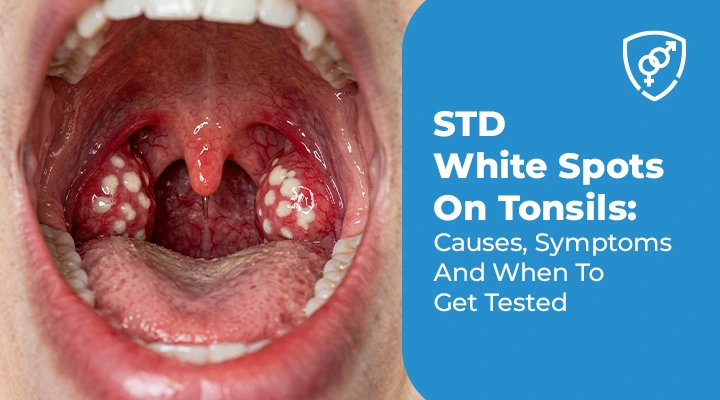
Yes, STDs can cause white spots on tonsils, particularly oral gonorrhea or (less commonly) chlamydia. However, most cases of white spots on tonsils are caused by common infections like strep throat, tonsillitis, or viral illnesses. Testing is recommended if symptoms persist or follow recent oral sexual exposure.
What Are White Spots On Tonsils?
White spots on tonsils also known as tonsillar exudate are white patches, dots, or coatings that appear on the tonsils during infection.
The tonsils are lymphatic tissues located at the back of the throat. Their job is to trap bacteria and viruses. When they become inflamed, they may develop:
- White patches on tonsils
- White dots on tonsils
- Pus-like coating
- Swelling and redness
These changes are a sign your immune system is responding to an infection.
Common Causes of White Spots in the Throat
Most cases of white spots in throat are NOT caused by STDs.
Common causes include:
Strep Throat
- Caused by Streptococcus bacteria
- Produces classic strep throat white spots
- Symptoms include severe sore throat, fever, and pain when swallowing
Tonsillitis
- Infection of the tonsils (viral or bacterial)
- Leads to white stuff on tonsils and swelling
Viral Infections
- Cold, flu, or mononucleosis
- May cause white spots on throat with fatigue and fever
Oral Thrush
- Fungal infection (Candida)
- Causes creamy white patches on tonsils and tongue
Tonsil Stones
- Trapped debris in tonsil crevices
- Appear as white bumps in throat or white dots on tonsils
Can STDs Cause White Spots on Tonsils?
Yes, but it is less common.
Certain oral STDs can lead to std white spots on tonsils, including:
Oral Gonorrhea
- One of the most common STD-related throat infections
- May cause redness, swelling, and sometimes white patches
- Often has mild or no symptoms
- Learn more about gonorrhea testing
Oral Chlamydia
- Less common in the throat
- May cause mild irritation or white spots on back of throat
- Learn more about chlamydia testing
Oral Herpes (HSV-1 or HSV-2)
- Typically causes painful sores rather than white patches
- Explore herpes testing
HPV (Human Papillomavirus)
- Causes warts, not typical white exudate
- See options for HPV testing
Many oral STDs are asymptomatic, meaning you may not notice symptoms at all.
STD vs Non-STD Causes: Key Differences
| Feature | STD-Related | Non-STD Causes |
| Cause | Sexual transmission | Bacteria or viruses |
| Symptoms | Often mild or none | Usually more severe |
| Pain level | Mild irritation | Significant sore throat |
| Testing | STD screening (NAAT) | Rapid strep or culture |
| Frequency | Less common | Very common |
Symptoms of STD-Related Throat Infections
Symptoms can be subtle. Watch for:
- Mild sore throat
- Difficulty swallowing
- Swollen tonsils
- White spots on back of throat
- Neck lymph node swelling
- Occasional redness or irritation
Unlike strep throat, symptoms may be mild or barely noticeable.
When Should You Get Tested for an STD?
If you’re unsure whether your symptoms could be STD-related, getting tested can provide clarity and peace of mind. At Manhattan STD Testing, testing is designed to be fast, confidential, and straightforward.
You should consider testing if:
- You had oral sex with a new or multiple partners
- Your partner tested positive for an STD
- You have persistent white spots on tonsils
- Symptoms don’t improve after a few days
- You have recurrent throat infections
Testing is the only way to confirm whether symptoms are STD-related.
How Doctors Diagnose The Cause?
Doctors may use:
- Throat swab
- Rapid strep test
- Throat culture
- STD NAAT testing (for gonorrhea/chlamydia)
- Blood tests (if needed)
A proper diagnosis ensures the right treatment.
Treatment Options
Treatment depends on the underlying cause.
For Non-STD Causes
- Antibiotics (for strep throat)
- Rest and hydration
- Pain relief medications
For STD Causes
- Targeted antibiotics (gonorrhea, chlamydia)
- Antiviral medications (herpes)
Always complete prescribed treatment and follow medical advice.
Prevention Tips
You can reduce risk by:
- Practicing safe oral sex (barriers like condoms/dental dams)
- Maintaining good oral hygiene
- Avoiding sharing utensils when sick
- Getting regular STD screenings
When To See A Doctor
Seek medical care if you have:
- Severe throat pain
- Fever
- Difficulty swallowing
- Persistent white patches
- Symptoms lasting more than 5-7 days
Early evaluation helps prevent complications.
Final Thoughts
Most cases of white spots on tonsils are caused by common infections and are not related to STDs. However, if there’s any uncertainty especially after oral sexual exposure testing is a simple and responsible step.
Manhattan STD Testing offers discreet and reliable testing options, helping you get accurate answers quickly without unnecessary stress.
Frequently Asked Questions
Can allergies cause white spots on tonsils?
Sometimes. Post-nasal drip can create mucus buildup that looks like white patches, but true spots are usually infection-related.
Are white spots on tonsils contagious?
Only if caused by infections like strep or viruses. Tonsil stones aren’t contagious. STD-related causes spread through oral contact.
Can poor oral hygiene cause white spots?
Yes. Bacteria buildup can lead to tonsil stones or debris that may appear as white spots.
Do white spots on tonsils go away on their own?
Often yes, especially with viral infections. Persistent or worsening symptoms should be checked.
Can smoking or vaping cause white patches?
Not directly, but they irritate the throat and increase risk of infections that may cause white spots.
Disclaimer
This blog is for informational & educational purposes only and does not intend to substitute any professional medical advice or consultation. For any health-related concerns, please consult with your physician, or call 911.

About The Author
Dr. Syra Hanif M.D.Board Certified Primary Care Physician

Dr. Syra Hanif is a board-certified Primary Care Physician (PCP) dedicated to providing compassionate, patient-centered healthcare.