



Noticing bumps in your throat or a rough, pebbled texture can be concerning. While many people worry about serious illness or an STD, it’s important to know that a cobblestone throat is a sign of inflammation, not a diagnosis itself.
This often leads to the question: What STDs cause cobblestone throat? While some STDs can involve the throat, many cases are caused by non-STD issues like allergies or acid reflux. Knowing the difference helps guide appropriate testing and treatment without unnecessary anxiety.
What Is Cobblestone Throat?
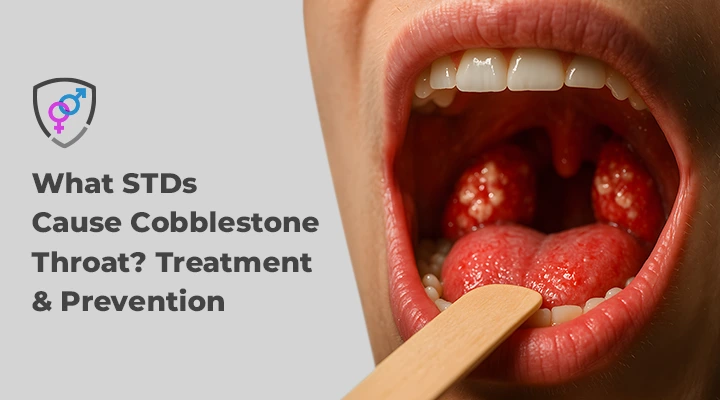
Cobblestone throat, also known as pharyngeal cobblestoning or cobblestoning of the posterior pharynx, describes a bumpy or pebble-like appearance on the back wall of the throat.
These bumps are enlarged lymphoid tissue. Lymphoid tissue is part of your immune system and helps trap viruses, bacteria, and other irritants that enter through the mouth or nose. When this tissue is repeatedly stimulated or inflamed, it swells, creating the classic cobblestone look.
Cobblestone throat is a visible reaction of your immune system, not a disease by itself.
What Causes Cobblestone Throat?
There are many possible cobblestone throat causes, and most are not sexually transmitted.
Common Non-STD Causes
- Postnasal drip from allergies or sinus infections
- Seasonal or environmental allergies
- Acid reflux (GERD or silent reflux)
- Viral infections such as colds or flu
- Smoking, vaping, or air pollution
Infectious Causes (Including STDs)
- Bacterial throat infections
- Sexually transmitted infections affecting the throat
This leads to the key concern: what STDs cause cobblestone throat, and how likely is that?
What STDs Cause Cobblestone Throat?
STDs do not usually cause true cobblestoning on their own, but some STDs can infect the throat, leading to inflammation that may result in a cobblestone appearance.
Gonorrhea
Pharyngeal gonorrhea is one of the most relevant answers to what STDs cause cobblestone throat.
- Transmitted through oral sex, especially after unprotected sex with a new or untreated partner
- Often asymptomatic, but may cause:
- Sore throat
- Redness
- Throat irritation
- Swollen lymphoid tissue
Because symptoms are often mild or absent, many people don’t realize they’re infected without testing.
Chlamydia
Oral chlamydia is less common than genital infection but still possible.
- Usually mild or asymptomatic
- May cause:
- Throat discomfort
- Inflammation
- Occasional bumps in the throat
Cobblestoning from chlamydia is uncommon but can occur due to an immune response. If oral exposure is a concern, targeted chlamydia testing can help confirm or rule out infection.
Syphilis
Syphilis can affect the mouth and throat, particularly in the early stages.
- Primary syphilis may cause painless sores
- Secondary syphilis can cause mucous patches in the throat
- These lesions may be mistaken for cobblestone throat
Because syphilis can progress if untreated, timely syphilis testing and antibiotic treatment are essential.
HPV (Human Papillomavirus)
HPV does not typically cause true cobblestone throat, but it can cause bumps or growths in the throat that are often confused with cobblestoning.
- May cause:
- Wart-like growths
- Cobblestone tonsils appearance
- Some strains are associated with throat cancer, though this is rare
If throat bumps are persistent or unexplained, HPV testing may be recommended as part of a broader evaluation.
Herpes (HSV-1)
Oral herpes can infect the throat and cause:
- Painful sores
- Redness and swelling
- Throat irritation
Herpes does not cause cobblestone throat directly, but it can coexist with pharyngeal cobblestoning due to inflammation. When symptoms suggest herpes, herpes testing can provide clarity.
Cobblestone Throat Symptoms
While cobblestone throat itself is not a diagnosis, it can sometimes overlap with STD symptoms when a throat infection is present.
Common cobblestone throat symptoms include:
- Bumpy or pebbled throat appearance
- Chronic sore throat
- Throat irritation or pain
- Mucus buildup
- Frequent throat clearing
- Rarely, mild bleeding if tissue is severely irritated
If you experience cobblestone throat pain or bleeding, medical evaluation is recommended.
Is Cobblestone Throat Dangerous?
In most cases, cobblestone throat is not dangerous. It reflects ongoing irritation or inflammation.
However, the underlying cause matters:
- STD-related causes require treatment
- Persistent symptoms may need further evaluation
Is Cobblestone Throat Contagious?
Cobblestone throat itself is not contagious.
However, if the cause is an infection such as gonorrhea, chlamydia, or a virus, that underlying condition may be contagious.
How Long Does Cobblestone Throat Last?
How long cobblestone throat lasts depends on the cause:
- Allergies: weeks to months if untreated
- Reflux: ongoing until reflux is controlled
- Infections: improves after proper treatment
- STD-related causes: resolves once the infection is treated
How Doctors Diagnose Cobblestone Throat
In cases where oral sexual exposure is possible, doctors may recommend a throat STD test to check for infections that don’t appear on standard genital testing.
Diagnosis usually involves:
- Physical examination of the throat
- Review of symptoms and sexual history
- Throat swabs for bacterial or STD testing
- Blood tests (for syphilis or HIV if indicated)
- Evaluation for reflux or allergies
Accurate diagnosis is essential, especially if STD exposure is possible. Clinics like Manhattan STD Testing specialize in confidential oral STD testing and can evaluate throat symptoms quickly and discreetly. For patients with multiple risk factors or unclear symptoms, a comprehensive STD panel may be the most efficient option.
Cobblestone Throat Treatment Options
Cobblestone throat treatment depends on the cause:
Medical Treatments
- Antibiotics for bacterial STDs like gonorrhea or syphilis
- Antivirals for herpes
- Allergy medications (antihistamines, nasal steroids)
- Acid reflux treatment (diet changes, medications)
Treating the root cause allows the throat tissue to heal.
How to Get Rid of Cobblestone Throat at Home
Supportive care can help reduce symptoms:
- Stay well hydrated
- Use saltwater gargles
- Run a humidifier
- Avoid smoking and throat irritants
- Limit caffeine and acidic foods if reflux is present
These steps help soothe irritation but do not replace medical treatment when infection is present.
Prevention Tips
To reduce your risk of cobblestone throat:
- Practice safer oral sex
- Get regular STD testing
- Manage allergies and sinus conditions
- Control acid reflux
- Avoid smoking and vaping
When to See a Doctor
Seek medical care if you have:
- Recent unprotected sex, particularly involving oral exposure
- Persistent throat bumps
- Throat pain or bleeding
- Fever or swollen lymph nodes
- Recent STD exposure
- Symptoms lasting more than a few weeks
Conclusion
Cobblestone throat is common and usually linked to allergies, reflux, or irritation. While STDs are only one possible cause, infections like gonorrhea, chlamydia, syphilis, herpes, and HPV can affect the throat and should be ruled out when risk factors exist.
If you’ve had recent oral sexual exposure or persistent symptoms, Manhattan STD Testing provides a confidential evaluation and comprehensive testing. With proper diagnosis and treatment, cobblestone throat is highly manageable.
Frequently Asked Questions
Can anxiety or stress cause cobblestone throat?
Stress does not directly cause cobblestone throat, but it can worsen reflux or dryness that irritates the throat.
Can cobblestone throat appear suddenly?
Yes. Sudden inflammation from allergies, viral illness, or postnasal drip can make cobblestoning appear quickly.
Does cobblestone throat always cause discomfort?
No. Some people notice bumps without pain, while others feel irritation or soreness.
Can dehydration make cobblestone throat worse?
Yes. Dehydration dries throat tissue and thickens mucus, increasing irritation.
Should cobblestone throat be evaluated even if there is no pain?
Yes. Persistent throat changes or possible STD exposure should still be evaluated.
Disclaimer
This blog is for informational & educational purposes only and does not intend to substitute any professional medical advice or consultation. For any health-related concerns, please consult with your physician, or call 911.

About The Author
Dr. Syra Hanif M.D.Board Certified Primary Care Physician

Dr. Syra Hanif is a board-certified Primary Care Physician (PCP) dedicated to providing compassionate, patient-centered healthcare.