



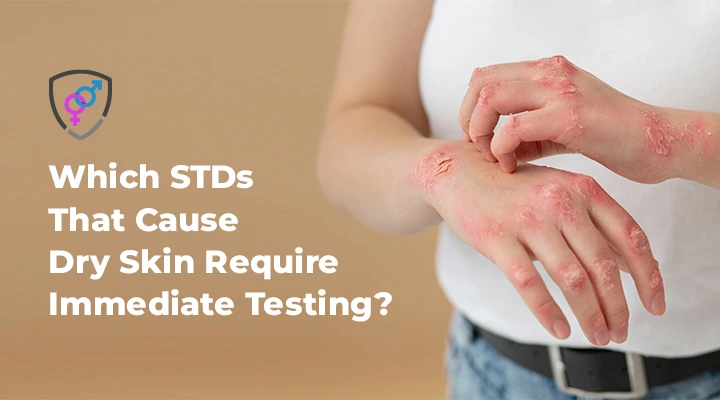
Dry, flaky skin or an unexplained rash can be worrying, especially if it appears after unprotected sex or alongside other STD symptoms. While dry skin is incredibly common, certain STDs that cause dry skin can lead to peeling, itching, redness, or rash-like irritation on the body, STD on hands, lips, thighs, armpits, or even the forehead.
At Manhattan STD Testing, we understand how stressful unexplained skin symptoms can feel. This guide walks you through which infections may cause dry skin, why these changes happen, what STD rashes look like, and when you should get tested right away.
Can STDs Really Cause Dry Skin or Peeling?
Yes, several STDs and STIs can trigger immune reactions that show up on the skin as:
- Dry patches
- Flaking or peeling
- Red or brown spots
- Itching or burning
- Blistering
These symptoms happen because infections like herpes, syphilis, or HIV can cause inflammation in the skin, while others may indirectly lead to dryness.
Some people also develop STD skin peeling on hands, rashes on the arms or thighs, or irritation around the mouth or lips. These changes are often mistaken for eczema, psoriasis, or allergic reactions.
If your dry skin comes on suddenly after sexual contact or is spreading, it’s worth evaluating for an STD rash.
STDs That Commonly Cause Dry Skin or Rashes
Below are the infections most associated with STDs that cause dry skin, including what their rashes typically look like and when to get tested.
Herpes (HSV-1 or HSV-2)
Herpes is one of the most common causes of localized skin irritation. After the initial blister stage, the skin can become:
- Dry
- Cracked
- Scabbed
- Peeling
Where It Appears
- Lips or around the mouth (cold sores)
- Genitals
- Buttocks
- Thighs
- Occasionally hands or fingers (herpetic whitlow)
When to test:
If any blister, cluster of bumps, or painful cracked skin appears after sexual contact, especially for the first time, test immediately. You can schedule fast, discreet herpes testing through Manhattan STD Testing.
Syphilis
Syphilis is known for its distinctive rash that often looks like dry, flaky patches. It can appear:
- On the palms and soles
- On the torso, arms, or thighs
- As rough, reddish-brown spots
Many people mistake it for eczema or an allergic reaction.
When to test:
Any unexplained widespread rash, especially involving the palms or soles, requires urgent testing, as syphilis progresses quickly without treatment. Manhattan STD Testing offers same‑day syphilis testing for accurate diagnosis.
Acute HIV Infection
Acute HIV can cause a widespread rash with:
- Dry patches
- Red or purple spots
- Mild peeling
This rash often shows up within 2–6 weeks after exposure and may come with fever, fatigue, sore throat, or swollen glands.
When to test:
If these symptoms appear after potential exposure, seek immediate testing. Our HIV testing service provides rapid and confidential results.
Chlamydia & Gonorrhea (Indirect Skin Symptoms)
Neither infection typically causes rashes directly. But in rare cases, they can trigger:
- Reactive arthritis, which may lead to skin peeling
- Dry or irritated patches on the inner thighs or torso due to inflammation
When to test:
If you have genital symptoms plus unexplained skin irritation.
Scabies (Often Mistaken for an STD)
Not technically an STD, but easily spread through close sexual or skin-to-skin contact.
Symptoms include:
- Intense itching (especially at night)
- Burrow-like lines on the skin
- Dryness and irritation
When to test:
If itching becomes severe or spreads quickly.
What STD Rashes Look Like?
STD rashes vary but commonly include:
- Red patches or bumps
- Dry, flaky skin
- Blisters or crusting
- Skin peeling on hands or feet
- Armpit or groin irritation
- Facial involvement (e.g., forehead rash STD)
STD Rash vs Common Skin Conditions
Dry skin is common, and many non-STD conditions can look similar, including:
- Eczema
- Psoriasis
- Fungal infections
- Heat rash
- Contact dermatitis
When an STD is more likely:
- The rash appears after unprotected sex
- It spreads fast
- It involves the palms, soles, genitals, lips, or mouth
- There are blisters or peeling patches
When Dry Skin or Rash Means You Need Immediate STD Testing
Seek testing right away if you experience:
- Painful blisters or sores
- Dry, peeling patches that spread
- Rash on palms, soles, lips, or genitals
- Fever, swollen glands, fatigue
- Rash after unprotected sex
- Itching that worsens or keeps you up at night
How Doctors Diagnose STDs With Skin Symptoms
Testing may include:
- Blood tests (HIV, syphilis, herpes)
- Swabs from lesions or genital areas
- Urine tests (chlamydia, gonorrhea)
- PCR testing for viral infections
- Skin examination or biopsy (rare)
- Throat STD test if you’ve had oral exposure, as some infections can occur in the throat and remain asymptomatic.
Professional evaluation is crucial; skin symptoms alone can’t confirm an STD. If you’re unsure which infection may be involved, our comprehensive STD panel testing covers all major STDs in one visit.
Treatment Options
- Antivirals: Herpes
- Antibiotics: Syphilis, chlamydia, gonorrhea
- HIV treatment: Antiretroviral therapy
- Anti-parasitic creams: Scabies
Skin care tips to relieve dryness:
- Fragrance-free moisturizers
- Avoiding hot showers
- Wearing loose, breathable clothing
Prevention Tips
- Use condoms and dental dams
- Get tested regularly
- Ask partners about their testing status
- Avoid sexual contact during outbreaks or irritation
Conclusion
Dry skin alone doesn’t always indicate an STD, but when it appears with rash-like changes, itching, or other STD symptoms after sexual activity, it’s important to get tested.
Early testing through Manhattan STD Testing leads to faster treatment, fewer complications, and better long-term health.
If you’re unsure whether a rash or dry patch is STD-related, seeking professional evaluation is the safest next step.
Frequently Asked Questions
Can dry skin alone be a sign of an STD?
Not usually. Most dry skin has non-STD causes, but if it appears with a rash, sores, or follows sexual exposure, testing is recommended.
Do STD rashes always itch?
No. Some STD rashes like syphilis may not itch at all, while others, such as herpes or scabies, often do.
Can an STD rash come and go?
Yes. Some rashes fade temporarily, especially in early HIV or syphilis, but the infection remains and still requires treatment.
Does a rash on the body mean the infection is spreading?
Not necessarily, but widespread rashes can occur in systemic infections like syphilis or acute HIV and should be evaluated quickly.
Should I test even if the rash looks mild?
Yes. Mild or subtle skin changes can still be associated with STDs, and early testing helps prevent complications.
Disclaimer
This blog is for informational & educational purposes only and does not intend to substitute any professional medical advice or consultation. For any health-related concerns, please consult with your physician, or call 911.

About The Author
Dr. Syra Hanif M.D.Board Certified Primary Care Physician

Dr. Syra Hanif is a board-certified Primary Care Physician (PCP) dedicated to providing compassionate, patient-centered healthcare.