



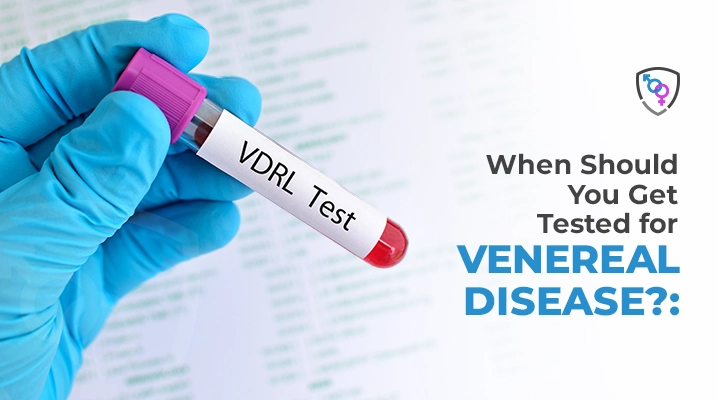
You should get tested for venereal disease if you have symptoms, a new partner, multiple partners, or have had unprotected sex. Routine screening is also recommended for sexually active individuals, even without symptoms. Early testing helps detect infections before complications develop and protects both you and your partners.
What Is A Venereal Disease (VD)?
A venereal disease (VD) is an infection primarily spread through sexual contact, including vaginal, oral, or anal sex. Today, the terms STD (sexually transmitted disease) and STI (sexually transmitted infection) are often used interchangeably.
- STI refers to the presence of an infection
- STD refers to when the infection causes symptoms
Many venereal diseases don’t cause symptoms right away, which is why regular screening is important.
Common Types Of Venereal Diseases
The most common types of venereal diseases include:
These infections vary in symptoms, severity, and treatment, but all can be managed effectively when detected early.
Venereal Disease Symptoms
Many people with a venereal disease have no symptoms. When symptoms do appear, they may include:
- Unusual discharge from the genitals
- Burning or pain during urination
- Sores, blisters, or rashes
- Pelvic or lower abdominal pain
- Pain during sex
- Flu-like symptoms (fever, fatigue, swollen glands)
If you notice any of these, getting tested promptly is important.
When Is The Right Time To Get Tested For VD?
You should consider a venereal disease test in the following situations:
After Unprotected Sex
If you’ve had unprotected sex, testing is recommended within a few weeks, depending on the infection.
With A New Sexual Partner
Testing before or after starting a new relationship helps ensure both partners are informed and protected.
If You Have Multiple Partners
More partners increase exposure risk, making regular testing essential.
If You Have Symptoms
Any unusual symptoms should be evaluated immediately.
If Your Partner Tests Positive
If a partner is diagnosed with an STD, you should get tested even if you feel fine.
During Pregnancy
Routine screening helps protect both parent and baby from complications.
How Often Should You Get Tested?
Testing frequency depends on your lifestyle and risk factors:
- Once a year: For most sexually active individuals
- Every 3–6 months: If you have multiple partners or higher risk
- As advised by a doctor: Based on age, health, and exposure
Regular screening is a normal part of preventive healthcare.
Types Of Venereal Disease Tests
There are several types of venereal disease screening methods:
Blood Tests
Used to detect infections like HIV, syphilis, and sometimes herpes.
Urine Tests
Common for chlamydia and gonorrhea screening.
Swab Tests
Samples may be taken from the throat, genitals, or rectum depending on exposure.
These tests are quick, accurate, and widely available.
What Happens During A VD Screening?
A venereal disease test is usually simple and quick:
- You may provide a urine sample, blood sample, or swab
- The process typically takes just a few minutes
- Testing is confidential and handled professionally
Most people experience little to no discomfort.
What Do Test Results Mean?
- Negative result: No infection detected (though early testing may miss recent exposure)
- Positive result: Infection is present and treatment or management is needed
Follow-up testing may sometimes be recommended to confirm results or monitor treatment.
Why Early Testing Is Important
Early detection of venereal diseases helps:
- Prevent long-term complications
- Reduce the risk of spreading infections
- Improve treatment success
- Protect reproductive health
Many infections are easier to treat when caught early.
Prevention Tips
You can reduce your risk of venereal disease by:
- Using condoms consistently
- Getting tested regularly
- Limiting the number of sexual partners
- Getting vaccinated (HPV, Hepatitis B)
- Communicating openly with partners
When To See A Doctor Immediately
Seek medical care if you experience:
- Severe pelvic or abdominal pain
- Fever with genital symptoms
- Painful sores or ulcers
- Unusual discharge with strong odor
Prompt care can prevent complications.
Final Thoughts
Getting tested for venereal disease is a normal and responsible part of taking care of your health. Whether you have symptoms or not, regular screening helps you stay informed, protect your partners, and access treatment early if needed.
If you’re unsure when to get tested, it’s always better to test sooner rather than wait. Manhattan STD Testing offers confidential, fast, and reliable screening options to help you take control of your sexual health with confidence.
Frequently Asked Questions
Can I test for a venereal disease during my period?
Yes. Most tests still work, though some swabs may be slightly affected.
Do I need to fast before a venereal disease test?
No. Fasting is not required for standard VD screening.
Can antibiotics affect test results?
Yes. Recent antibiotics may reduce accuracy for some infections.
Can you wait too long to get tested?
Delaying testing can lead to complications and harder treatment.
Does oral or anal sex require different testing?
Yes. Additional throat or rectal swabs may be needed.
Are venereal disease test results confidential?
Yes. Results are private and protected by healthcare privacy laws.
Disclaimer
This blog is for informational & educational purposes only and does not intend to substitute any professional medical advice or consultation. For any health-related concerns, please consult with your physician, or call 911.

About The Author
Dr. Syra Hanif M.D.Board Certified Primary Care Physician

Dr. Syra Hanif is a board-certified Primary Care Physician (PCP) dedicated to providing compassionate, patient-centered healthcare.