



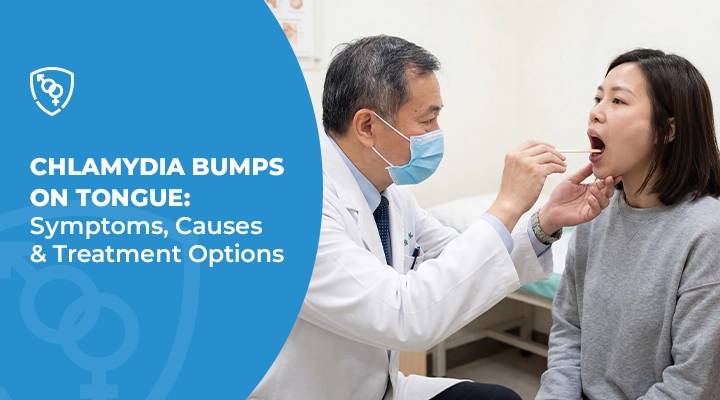
Chlamydia bumps on the tongue are uncommon. Oral chlamydia typically affects the throat rather than the tongue and may cause mild symptoms such as a sore throat or irritation. Tongue bumps can occur for many reasons, including irritation or other infections. If symptoms appear after oral sexual contact, STD testing can help determine the cause.
What Is Oral Chlamydia?
Oral chlamydia is a sexually transmitted infection caused by the bacterium Chlamydia trachomatis. It usually spreads through oral sexual contact with an infected partner.
While many people associate chlamydia with genital infections, the bacteria can also infect areas of the mouth and throat, including:
- The throat (oropharynx)
- Tonsils
- The back of the mouth
This condition is sometimes called chlamydia of the mouth or an oropharyngeal chlamydia infection.
Can Chlamydia Cause Bumps On the Tongue?
People who notice chlamydia bumps on tongue are worried that small bumps or sores in the mouth might be an STD.
While it is possible, it is not the most common symptom.
Oral chlamydia typically causes symptoms affecting the throat rather than visible tongue lesions.
Possible oral signs may include:
- mild irritation in the mouth
- inflamed tissue
- small sores
- redness in the throat
In rare situations, inflammation could appear as small bumps or irritated areas, which some people interpret as chlamydia bumps.
However, medical experts note that most tongue bumps are caused by other conditions, not chlamydia.
Symptoms of Chlamydia in the Mouth
Many oral chlamydia infections are asymptomatic, meaning they cause no noticeable symptoms.
When symptoms occur, they may include:
Common Oral Chlamydia Symptoms
- Sore throat
- Mouth irritation
- Swollen tonsils
- Mild fever
- Pain when swallowing
Possible Tongue STD Symptoms
Some individuals report:
- tongue irritation
- mouth ulcers
- redness inside the mouth
- small bumps on the tongue
- swollen lymph nodes in the neck
These symptoms are sometimes described online as chlamydia tongue symptoms or tongue STD symptoms.
However, these signs can overlap with many other oral conditions.
What Do STD Bumps on the Tongue Look Like?
Many people worry about STD bumps on tongue often want to know what these bumps might look like.
Possible appearances include:
- Small red bumps
- White patches
- Ulcer-like sores
- Inflamed or raised areas
Some individuals describe these as a std bump on tongue or multiple STDs on tongue lesions.
However, medical professionals emphasize that appearance alone cannot diagnose an STD. Many common oral conditions look similar.
Other Conditions That Cause Tongue Bumps
Most bumps on the tongue are caused by non-STD conditions.
Common causes include:
Canker Sores
Small painful ulcers that develop inside the mouth.
Oral Herpes
Caused by herpes simplex virus, producing painful blisters or sores.
HPV Oral Warts
Human papillomavirus can cause small flesh-colored growths in the mouth.
Allergic Reactions
Food sensitivities or irritation can inflame taste buds.
Oral Thrush
A yeast infection that causes white patches on the tongue and mouth.
Geographic Tongue
A harmless condition where smooth red patches appear on the tongue.
Because these conditions can look similar to chlamydia bumps on tongue, proper medical testing is often needed for an accurate diagnosis.
How Oral Chlamydia Is Transmitted?
Chlamydia can reach the mouth through sexual contact involving oral exposure.
Transmission may occur through:
- Oral sex with an infected partner
- Contact with infected genital fluids
- Oral-anal contact
- Exposure to infected mucous membranes
In some cases, a person may develop chlamydia on tongue or lips after exposure.
Another important factor is asymptomatic carriers.
Diagnosis of Chlamydia in the Mouth
Doctors diagnose oral chlamydia using laboratory testing.
The most accurate method is a NAAT test (Nucleic Acid Amplification Test).
How Testing Works?
A healthcare provider typically:
- Uses a throat swab
- Sends the sample to a laboratory
- Detects genetic material from Chlamydia trachomatis
NAAT testing is widely recommended by infectious disease guidelines because it is highly sensitive and accurate.
Doctors may also recommend testing for other STDs at the same time, including:
For individuals seeking confidential and professional screening, clinics such as Manhattan STD Testing provide comprehensive oral and throat STD testing using modern diagnostic methods.
This is because oral symptoms can sometimes overlap.
Treatment Options for Oral Chlamydia
The good news is that chlamydia is treatable and curable with antibiotics.
Common treatments include:
Antibiotics
- Doxycycline
- Azithromycin
Your doctor may recommend:
- completing the full antibiotic course
- avoiding sexual contact during treatment
- informing sexual partners so they can be tested
If symptoms such as chlamydia mouth sores or irritation occur, they usually improve after treatment.
Prevention Tips
Reducing the risk of oral STDs involves a combination of protective practices and regular testing.
Helpful prevention strategies include:
- Use condoms or dental dams during oral sex
- Avoid sexual contact if a partner has visible sores
- Schedule regular STD screening
- Communicate openly with partners about sexual health
These steps can significantly reduce the risk of infections such as chlamydia of the mouth.
When To See A Doctor
While testing can be done even without symptoms, certain signs mean you should seek medical care promptly.
Contact a healthcare professional if you experience:
- persistent mouth sores lasting more than 1–2 weeks
- severe throat pain
- difficulty swallowing
- fever along with throat symptoms
- unexplained lesions or bleeding bumps on the tongue
A clinician can examine the mouth, rule out other infections, and recommend STD testing or additional evaluation if needed.
Conclusion
Tongue bumps can be concerning, but many conditions can cause them. Because oral chlamydia is often mild or symptom‑free, testing is the most reliable way to confirm an infection. With proper diagnosis and treatment, chlamydia and other oral STDs are treatable. If you’re worried about symptoms or recent exposure, confidential screening at Manhattan STD Testing can help you get clear answers.
Frequently Asked Questions
Can oral chlamydia go away without treatment?
Oral chlamydia usually requires antibiotics to clear the infection. Even if symptoms improve, the bacteria may remain and still be contagious.
How soon after oral exposure can chlamydia be detected?
Chlamydia can usually be detected within 5–14 days after exposure using a throat swab test.
Can chlamydia spread through kissing?
Kissing alone rarely spreads chlamydia. The infection is mainly transmitted through oral sexual contact with infected fluids.
Are oral STDs common?
Oral STDs are less common than genital infections but can occur through unprotected oral sex, especially with infections like chlamydia, gonorrhea, herpes, and HPV.
Can a dentist notice signs of an oral STD?
Dentists may notice unusual sores or lesions in the mouth, but laboratory testing is required to confirm an STD diagnosis.
Disclaimer
This blog is for informational & educational purposes only and does not intend to substitute any professional medical advice or consultation. For any health-related concerns, please consult with your physician, or call 911.

About The Author
Dr. Syra Hanif M.D.Board Certified Primary Care Physician

Dr. Syra Hanif is a board-certified Primary Care Physician (PCP) dedicated to providing compassionate, patient-centered healthcare.